Pelvic and inguinal lymph drainage
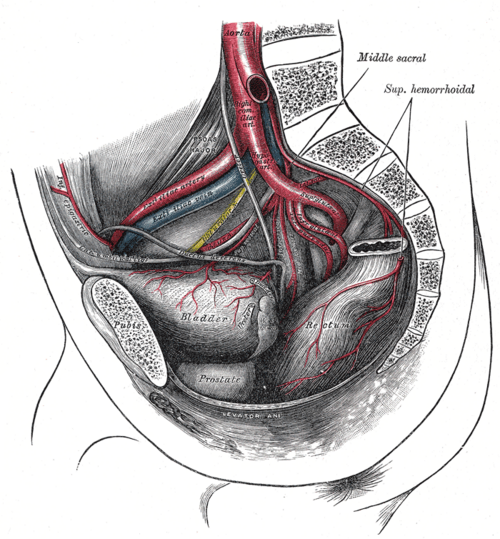
Iliac, sacral and inguinal node groups that drain the pelvis and perineum. The rule "lymph follows the arteries" (gonads to para-aortic, perineal skin to superficial inguinal) predicts where pelvic cancers spread.
Core anatomy
- Location
External iliac nodes along the external iliac vessels (including the obturator nodes near the obturator nerve); internal iliac nodes along the internal iliac vessels; sacral nodes in front of the sacrum; common iliac nodes around the common iliac vessels; superficial inguinal nodes in the subcutaneous tissue below the inguinal ligament (horizontal and vertical groups); deep inguinal nodes medial to the femoral vein.
- Drains
Superficial inguinal: skin of the lower abdominal wall below the umbilicus, buttock, perineum, scrotum, vulva, lower vagina, the anal canal below the pectinate line, and the lower limb (via the vertical group). Also some lymph from the uterine fundus along the round ligament. Deep inguinal: glans of the penis/clitoris, spongy urethra and superficial inguinal efferents. External iliac: inguinal nodes, bladder, prostate, upper vagina and cervix. Internal iliac: most pelvic viscera, the deep perineum and gluteal region. Sacral: Rectum, cervix and prostate (posterior). Lumbar (para-aortic): testis, ovary, uterine tubes and uterine fundus (following the gonadal vessels) and the common iliac nodes.
- Drains to
Superficial → deep inguinal → external iliac → common iliac → lumbar (para-aortic/caval) nodes → lumbar trunks → cisterna chyli → thoracic duct. The upper rectum drains separately to the inferior mesenteric nodes.
- Relations
The obturator nodes lie on the lateral pelvic wall around the obturator nerve and vessels — the first-echelon nodes for the cervix, prostate and bladder, sampled in pelvic lymphadenectomy.
- Notes
Key contrasts: testis → para-aortic, but scrotum → superficial inguinal. Anal canal above the pectinate line → internal iliac; below → superficial inguinal. Ovary/uterine fundus → para-aortic; cervix → iliac and sacral.
Mentioned in
- Anal canal
- Femoral triangle
- Ovary
- Penis
- Prostate
- Rectum
- Testis and epididymis
- Urethra
- Urinary bladder
- Uterus
- Vagina
- Vulva
Generated automatically from links in other entries.

Clinical correlations
Testicular vs scrotal cancer spread PANCE
- Mechanism / lesion
The testis drains to the para-aortic nodes (its embryologic origin); scrotal skin drains to the superficial inguinal nodes.
- Classic presentation
Testicular cancer causes retroperitoneal, not inguinal, lymphadenopathy — unless the scrotum has been violated. Hence the inguinal (not scrotal) approach for orchiectomy.
Inguinal lymphadenopathy PANCE
- Mechanism / lesion
Infection or cancer in the drainage area: sexually transmitted infections (syphilis — painless nodes with a painless chancre; HSV — tender nodes with painful vesicles; chancroid — painful ulcer with suppurative nodes; LGV — painless ulcer then painful "groove sign" buboes), lower limb infections, and cancers of the vulva, penis, anus (below the pectinate line) and lower-limb skin (melanoma).
- Classic presentation
Enlarged inguinal nodes; examine the entire drainage area including the perineum, anus and feet.
Pelvic nodal metastases
- Mechanism / lesion
Cervical, prostate, bladder, endometrial and rectal cancers spread to the obturator, iliac and sacral nodes.
- Classic presentation
Found on staging imaging or lymphadenectomy; nodal involvement upstages the cancer (e.g. FIGO stage IIIC for cervical cancer). Lymphedema of the legs can follow dissection or radiation.
High-yield PANCE pearls
- Testis → para-aortic; scrotum → superficial inguinal.
- Below the pectinate line, vulva, penile skin, lower vagina → superficial inguinal.
- Ovary/uterine fundus → para-aortic; cervix → obturator/iliac/sacral.
- Painless ulcer + painless nodes = syphilis; painful ulcer + suppurative nodes = chancroid; groove sign = LGV.
Imaging anatomy
- CT
CT of the abdomen and pelvis shows enlarged nodes (short-axis size criteria, about 1 cm for most pelvic groups) for staging. verify
- MRI
MRI assesses pelvic nodes during local staging of rectal, cervical and prostate cancer.
- Ultrasound
Ultrasound of inguinal nodes (cortical thickening, loss of fatty hilum) with fine-needle aspiration.
- Key views & landmarks
- PET-CT or PSMA PET for nodal staging
Physical exam
- Surface landmarks
Superficial inguinal nodes: a horizontal group just below and parallel to the inguinal ligament and a vertical group along the upper great saphenous vein. Pelvic nodes are not palpable.
- Palpation
Palpate both groin regions with the patient supine; small (under about 1 cm), mobile, non-tender nodes are commonly normal. Note size, tenderness, consistency, fixation and whether they suppurate.
Self-quiz
A 30-year-old man has a seminoma of the left testis. Which lymph nodes are most likely to be involved first?
Correct answer: C
Testicular lymphatics follow the testicular vessels to the lumbar (para-aortic) nodes; on the left they drain near the left renal vein, where the left testicular vein ends. Inguinal nodes are involved only if the scrotal skin is affected.
Show answer
C
Testicular lymphatics follow the testicular vessels to the lumbar (para-aortic) nodes; on the left they drain near the left renal vein, where the left testicular vein ends. Inguinal nodes are involved only if the scrotal skin is affected.
A squamous cell carcinoma of the labia majora would first metastasize to which nodes?
Correct answer: C
The vulva, like other perineal skin, drains to the superficial inguinal nodes, which are removed or sampled in vulvar cancer surgery.
Show answer
C
The vulva, like other perineal skin, drains to the superficial inguinal nodes, which are removed or sampled in vulvar cancer surgery.
A man has a painless, indurated penile ulcer and painless, rubbery bilateral inguinal lymphadenopathy. What is the most likely diagnosis?
Correct answer: C
Primary syphilis causes a painless indurated chancre with painless regional lymphadenopathy. Chancroid is painful with suppurative nodes; herpes causes painful vesicles and tender nodes.
Show answer
C
Primary syphilis causes a painless indurated chancre with painless regional lymphadenopathy. Chancroid is painful with suppurative nodes; herpes causes painful vesicles and tender nodes.
Which nodes on the lateral pelvic wall are first-echelon nodes for the cervix, prostate and bladder, and are sampled in pelvic lymphadenectomy?
Correct answer: C
The obturator nodes (part of the external iliac group) lie around the obturator nerve and vessels on the lateral pelvic wall. They are first-echelon nodes for the cervix, prostate and bladder.
Show answer
C
The obturator nodes (part of the external iliac group) lie around the obturator nerve and vessels on the lateral pelvic wall. They are first-echelon nodes for the cervix, prostate and bladder.
A man has a painful genital ulcer and tender, suppurative inguinal lymph nodes. What is the most likely diagnosis?
Correct answer: D
Chancroid causes a painful ulcer with suppurative nodes. Syphilis causes a painless chancre with painless nodes; HSV causes painful vesicles with tender nodes; LGV causes a painless ulcer followed by painful buboes (the "groove sign"). Testicular cancer spreads to para-aortic, not inguinal, nodes.
Show answer
D
Chancroid causes a painful ulcer with suppurative nodes. Syphilis causes a painless chancre with painless nodes; HSV causes painful vesicles with tender nodes; LGV causes a painless ulcer followed by painful buboes (the "groove sign"). Testicular cancer spreads to para-aortic, not inguinal, nodes.
Flashcards
See also
- Thoracic duct
- Anal canal
- Testis and epididymis
- Vulva
- Anal canal above vs below the pectinate line (comparison table)
- Lymph drainage of the pelvis and perineum (comparison table)