Pelvic autonomic nerves
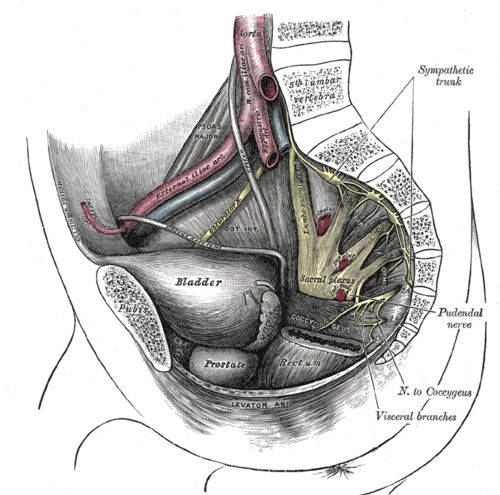
Sympathetic hypogastric nerves and parasympathetic pelvic splanchnic nerves (S2–S4) that meet in the inferior hypogastric plexus to control the bladder, rectum and sexual function. They are at risk in prostate and rectal surgery.
Core anatomy
- Location
Superior hypogastric plexus in front of the aortic bifurcation and sacral promontory (about L5); hypogastric nerves descending into the pelvis; inferior hypogastric (pelvic) plexuses on the lateral walls of the rectum, bladder base and prostate or cervix/vagina.
- Root values
Sympathetic: lumbar splanchnic nerves (T11/T12–L2) to the superior hypogastric plexus, plus sacral splanchnic nerves from the sacral sympathetic trunks. Parasympathetic: pelvic splanchnic nerves from the ventral rami of S2–S4.
- Origin
Superior hypogastric plexus (sympathetic) and the S2–S4 ventral rami (parasympathetic).
- Course
The superior hypogastric plexus divides into right and left hypogastric nerves, which descend to the inferior hypogastric plexuses. The pelvic splanchnic nerves join these plexuses directly; some parasympathetic fibers ascend through the hypogastric nerves and along the inferior mesenteric artery to supply the descending and sigmoid colon (the hindgut beyond the vagus nerve's territory).
- Branches
- Middle rectal plexus to the rectum
- Vesical plexus to the bladder
- Prostatic plexus, giving the cavernous nerves to the erectile tissue of the penis (posterolateral to the prostate)
- Uterovaginal plexus to the uterus, cervix, vagina and the erectile tissue of the clitoris and vestibular bulbs
- Motor
Parasympathetic: detrusor contraction (voiding), rectal contraction with relaxation of the internal anal sphincter (defecation), erection (vasodilation). Sympathetic: contraction of the bladder neck/internal urethral sphincter (storage and preventing retrograde ejaculation), emission (contraction of the ductus deferens, seminal glands and prostate), vasoconstriction, and internal anal sphincter tone.
- Sensory
Pelvic pain line: pain from viscera in contact with peritoneum (above the line — bladder dome, uterine body) travels with sympathetic fibers to T11–L2; pain from viscera below the peritoneum (bladder neck, cervix, upper vagina, rectum) travels with parasympathetic fibers to S2–S4. Stretch/reflex afferents follow the parasympathetic pathway. (The sigmoid colon is an exception, sending pain with the parasympathetic fibers.) verify
- Relations
The ureters, internal iliac vessels and mesorectal fascia lie close to the inferior hypogastric plexus; the plexus lies within the endopelvic fascia lateral to the rectum.
- Notes
"Point and Shoot" — Parasympathetic for erection (point), Sympathetic for emission (shoot), with somatic pudendal nerve fibers for ejaculation and the external sphincters.
Other structures innervated
Mentioned in
Generated automatically from links in other entries.

Clinical correlations
Neurogenic bladder PANCE
- Mechanism / lesion
Suprasacral spinal cord lesions (above S2) → detrusor overactivity and detrusor–sphincter dyssynergia (spastic, small-capacity bladder). Sacral/cauda equina lesions or peripheral neuropathy (diabetes) → an areflexic, overdistended bladder with overflow incontinence.
- Classic presentation
Urgency and reflex incontinence (upper motor neuron) vs retention with overflow (lower motor neuron); recurrent UTIs; managed with clean intermittent catheterization and antimuscarinics.
Autonomic dysreflexia PANCE
- Mechanism / lesion
Spinal cord injury at or above T6: a stimulus below the lesion (most often a distended bladder or impacted stool) triggers massive, uncontrolled sympathetic discharge.
- Classic presentation
Sudden severe hypertension, pounding headache, flushing and sweating above the lesion, and reflex bradycardia. Sit the patient up, loosen clothing, drain the bladder (check the catheter), and treat persistent hypertension with a fast-acting agent.
Pelvic nerve injury in surgery
- Mechanism / lesion
Radical prostatectomy (cavernous nerves), total mesorectal excision for rectal cancer, and radical hysterectomy can damage the inferior hypogastric plexus.
- Classic presentation
Erectile dysfunction, ejaculatory dysfunction, and urinary retention or incontinence; nerve-sparing techniques reduce the risk.
Superior hypogastric plexus block
- Mechanism / lesion
Neurolytic block in front of L5–S1 for intractable pelvic cancer pain.
- Classic presentation
Relieves visceral pelvic pain carried by sympathetic afferents.
High-yield PANCE pearls
- Parasympathetic S2–S4: bladder emptying, defecation, erection. Sympathetic T11–L2: storage, emission.
- SCI at/above T6 + headache + severe HTN + bradycardia → autonomic dysreflexia → sit up, check the bladder.
- Nerve-sparing prostatectomy preserves the cavernous nerves.
- Upper motor neuron bladder = spastic/small; lower motor neuron (cauda equina, diabetes) = flaccid, retention + overflow.
Imaging anatomy
- MRI
The nerves themselves are not usually seen; MRI shows lesions of the conus, cauda equina and pelvis that affect them.
- Ultrasound
Post-void residual measurement and urodynamic studies assess bladder function.
Physical exam
- Surface landmarks
The superior hypogastric plexus lies in front of L5/sacral promontory, just below the aortic bifurcation (about L4).
- Strength / function testing
Post-void residual; saddle sensation, anal tone and voluntary contraction, anal wink and bulbocavernosus reflex (S2–S4 somatic arcs that travel with the same segments). Urodynamics for detailed bladder function.
Self-quiz
A 30-year-old man with a C6 spinal cord injury develops a pounding headache and sweating. BP is 210/110 mm Hg and heart rate 48/min. What is the most appropriate first step?
Correct answer: B
This is autonomic dysreflexia (injury at or above T6). The first steps are to sit the patient up (orthostatic lowering of BP) and remove the triggering stimulus, most often a distended bladder or blocked catheter. Antihypertensives are added if BP remains high.
Show answer
B
This is autonomic dysreflexia (injury at or above T6). The first steps are to sit the patient up (orthostatic lowering of BP) and remove the triggering stimulus, most often a distended bladder or blocked catheter. Antihypertensives are added if BP remains high.
Which fibers are responsible for erection?
Correct answer: B
Erection is parasympathetic (pelvic splanchnic nerves → cavernous nerves → nitric oxide). Emission is sympathetic, and ejaculation depends on somatic pudendal fibers to bulbospongiosus ("Point and Shoot").
Show answer
B
Erection is parasympathetic (pelvic splanchnic nerves → cavernous nerves → nitric oxide). Emission is sympathetic, and ejaculation depends on somatic pudendal fibers to bulbospongiosus ("Point and Shoot").
Pain from the uterine body during first-stage labor travels with which fibers?
Correct answer: B
The uterine body lies above the pelvic pain line (covered by peritoneum), so its pain afferents travel with sympathetic fibers to about T10–L1 — the target of labor epidurals. Cervical and perineal (second-stage) pain travels via S2–S4.
Show answer
B
The uterine body lies above the pelvic pain line (covered by peritoneum), so its pain afferents travel with sympathetic fibers to about T10–L1 — the target of labor epidurals. Cervical and perineal (second-stage) pain travels via S2–S4.
Contraction of the ductus deferens, seminal glands and prostate during emission is mediated mainly by which fibers?
Correct answer: D
"Point and Shoot": parasympathetic fibers (S2–S4) cause erection, sympathetic fibers (lumbar splanchnic nerves, T11/T12–L2) cause emission, and somatic pudendal fibers (bulbospongiosus) produce ejaculation. Sympathetic contraction of the bladder neck also prevents retrograde ejaculation.
Show answer
D
"Point and Shoot": parasympathetic fibers (S2–S4) cause erection, sympathetic fibers (lumbar splanchnic nerves, T11/T12–L2) cause emission, and somatic pudendal fibers (bulbospongiosus) produce ejaculation. Sympathetic contraction of the bladder neck also prevents retrograde ejaculation.
A 64-year-old man with long-standing diabetes has a large post-void residual volume and dribbling overflow incontinence. Which bladder pattern is most likely?
Correct answer: A
Sacral or cauda equina lesions and peripheral (diabetic) neuropathy produce an areflexic, overdistended bladder with retention and overflow. Suprasacral cord lesions instead cause detrusor overactivity and detrusor–sphincter dyssynergia (a small, spastic bladder). Management includes clean intermittent catheterization.
Show answer
A
Sacral or cauda equina lesions and peripheral (diabetic) neuropathy produce an areflexic, overdistended bladder with retention and overflow. Suprasacral cord lesions instead cause detrusor overactivity and detrusor–sphincter dyssynergia (a small, spastic bladder). Management includes clean intermittent catheterization.