Levator scapulae
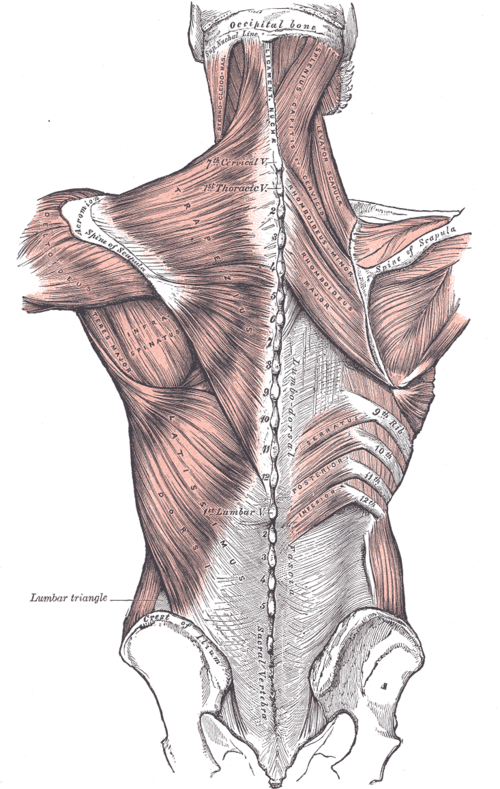
Strap-like muscle from the upper cervical transverse processes to the superior angle of the scapula. It elevates the scapula and is a frequent source of neck and shoulder stiffness.
Core anatomy
- Location
Posterolateral neck, forming part of the floor of the posterior triangle, deep to trapezius and sternocleidomastoid.
- Group
Superficial extrinsic back muscles (with the rhomboids, deep to trapezius).
- Origin
Posterior tubercles of the transverse processes of C1–C4.
- Insertion
Medial border of the scapula from the superior angle to the root of the spine.
- Innervation
Dorsal scapular nerve (C5) and cervical plexus branches (C3–C4).
- Blood supply
Dorsal scapular artery and branches of the transverse cervical and ascending cervical arteries.
- Action
- Elevates the scapula; rotates the glenoid downward (with the rhomboids)
- With the scapula fixed, laterally flexes and extends the neck
- Relations
Lies in the floor of the posterior triangle; the spinal accessory nerve crosses superficial to it.

Clinical correlations
Levator scapulae syndrome ("stiff neck")
- Mechanism / lesion
Muscle strain or spasm from posture (phone and desk use), sleeping position, or carrying bags on one shoulder.
- Classic presentation
Pain at the superior angle of the scapula and side of the neck, limited neck rotation toward the affected side, and a tender trigger point near the superior angle.
High-yield PANCE pearls
- Levator scapulae: C1–C4 transverse processes → superior angle of scapula; elevates the scapula.
- Tender superior angle of the scapula + limited neck rotation → levator scapulae strain.
Imaging anatomy
- MRI
Rarely needed; excludes cervical spine pathology if neurologic signs or red flags are present.
Physical exam
- Surface landmarks
Palpable at the superior angle of the scapula, deep to trapezius.
- Palpation
Palpate the insertion at the superior angle for tenderness.
- Strength / function testing
Resisted shoulder elevation (with trapezius); neck rotation and lateral flexion stretch it.
Self-quiz
Where does levator scapulae insert?
Correct answer: B
Levator scapulae inserts on the superior angle and medial border of the scapula above the spine.
Show answer
B
Levator scapulae inserts on the superior angle and medial border of the scapula above the spine.
Levator scapulae arises from which vertebrae?
Correct answer: A
It arises from the posterior tubercles of the transverse processes of C1–C4.
Show answer
A
It arises from the posterior tubercles of the transverse processes of C1–C4.
Which combination of muscles elevates the scapula?
Correct answer: B
The upper trapezius and levator scapulae elevate the scapula (shrugging).
Show answer
B
The upper trapezius and levator scapulae elevate the scapula (shrugging).